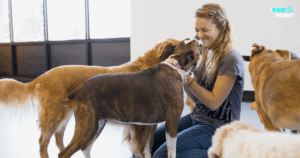

Puppies are adorable… and chaotic little balls of energy. Whether they’re joining you for their first daycare session or ruling the living room at home, getting their routine, walks, play and socialisation right now sets them up for life. The right early habits mean less stress, fewer accidents and a whole lot more wagging tails. In this guide, I’ll show you how to keep your puppy safe, happy and confident… while keeping your sanity intact.
1. Walks & Play: Burn Energy the Right Way
Why it matters: Puppies are full of energy, but their bodies are still growing. Overdoing it can harm joints, over-stimulate their brains or trigger stress-related behaviours.
Daycare example: Daisy, an 11-month-old Springer Spaniel, arrived bouncing off the walls. We did a 10-minute controlled walk on a long line, a sniff session in the garden, then five minutes of gentle fetch. By the end, she was tired, happy and calm, no crashes, no over-excitement.
Tips:
- Use the “5 minutes per month of age” rule: a 3-month-old gets about 15 minutes per session.
- Mix physical activity with mental stimulation, sniffing, hide-and-seek and gentle fetch.
- Short, frequent sessions beat one long, chaotic romp. Trust me, your arms and sanity will thank you.
2. Socialisation: Making Dog Friends
Why it matters: Puppies learn about the world through experiences. Positive early encounters build confidence; negative ones can create fear or reactivity.
Daycare example: Max, a shy little Dachshund, froze when meeting a bouncy Labrador. Instead of forcing it, we introduced him slowly to one calm dog at a time. Within a week, Max was initiating gentle play himself and stress signals like hiding and whining disappeared. Small steps, big confidence boost!
Tips:
- Start with one calm dog before introducing bigger groups.
- Neutral ground works best; avoid throwing a puppy straight into a chaotic playroom.
- Reward confident and curious behaviour with praise or a small treat.
3. Routine & Comfort: Calm Puppies Are Happy Puppies
Why it matters: Predictable routines reduce anxiety, prevent accidents and help puppies adapt to new environments.
Daycare example: Bella, a 4-month-old Cocker Spaniel, had separation anxiety during her first overnight stay. By sticking to her usual feeding, toilet and nap schedule, and giving her favourite blanket, she settled quickly, slept through the night and was ready for a happy morning walk.
Tips:
- Keep feeding and potty times consistent.
- Create quiet nap zones with comfort items from home.
- Mimic home routines in daycare where possible, familiarity is everything.
4. Mental Stimulation: Tire the Brain, Not Just the Body
Why it matters: Puppies get mentally tired faster than physically. Bored puppies invent their own fun…often destructive.
Daycare example: Alfie, a clever Border Collie pup, had a snuffle mat and a simple treat-hiding game mid-morning. Instead of zooming around and pestering other dogs, he focused on sniffing and problem-solving for 10 minutes, calm, satisfied and happy.
Tips:
- Use puzzle toys, treat balls, or simple scent games indoors.
- Mix short training sessions (2–5 mins) with play.
- Rotate toys regularly to maintain interest and engagement.
5. Updates & Communication: Keeping Owners in the Loop
Why it matters: Owners will worry non-stop about their puppy, especially when they aren’t with them. Regular updates reassure them and build trust.
Daycare example: With a new Labrador pup, we sent 3 “pupdates” across the day: a photo sniffing the garden, a video playing with other dogs and a snapshot napping in her cosy corner. The owners were relaxed, confident and shared her happiness with friends. A little free marketing for us!
Tips:
- Personalise updates: include the puppy’s name and a short note about what they’re doing.
- Send 1–2 updates for half-days, 3–4 for full days.
- Always ask permission for social media sharing, this shows off the fun and safety of your daycare.
These early foundations make your daycare a safe, fun and trusted place for puppies, while giving you the confidence to grow your business knowing you’re doing it right. Put these tips into practice and watch your puppies thrive. Happy, confident and ready to take on the world, one wagging tail at a time!